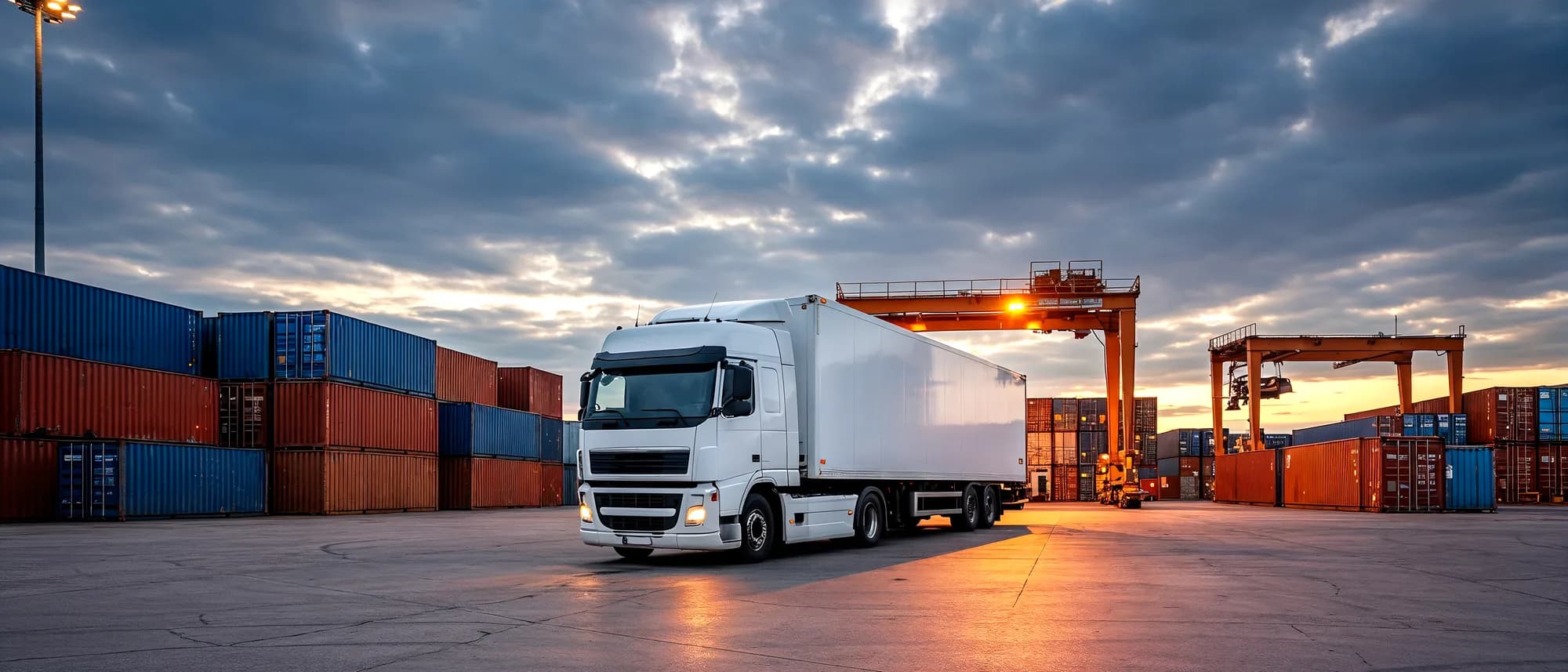
Tema handles roughly 85% of Ghana's container traffic and has the deep-water capacity for the largest vessels, so it is the default for containerised imports. Takoradi is the better choice for cargo destined for the western mining, oil and gas belt, where the shorter inland haul can outweigh Tema's greater sailing frequency.
The port decision is usually made by the shipping line's schedule rather than by the importer. That is often the wrong way round, because the cost that follows the port — the inland haul — can be larger than the difference in sea freight.
This guide compares the two on the grounds that actually matter to a Ghanaian consignee: capacity, sailing options and where the cargo is going once it leaves the gate.
Tema is Ghana's principal container gateway, handling in the region of 85% of national container traffic. Its capacity was transformed by Terminal 3, operated by Meridian Port Services and commissioned in 2019.
Terminal 3 spans about 127 hectares with a 1.4-kilometre quay dredged to roughly 16 metres, deep enough to take the largest container vessels afloat. Its own annual handling capacity exceeds a million TEU, and it tripled the port's overall capacity to around 3.5 million containers a year. For an importer, depth and capacity translate into something simpler: more services calling, more often, and less risk of a vessel omitting the port.
Takoradi has historically been Ghana's bulk and resources port — manganese, bauxite, cocoa and the offshore oil and gas industry — and handles a small fraction of Tema's container volumes.
That is changing. A container and bulk terminal originally developed by the Ghanaian firm Ibistek now operates under a joint arrangement in which Yilport holds a controlling 51% stake, the Ghana Ports and Harbours Authority 30% and Ibistek 19%, under a 25-year concession. For cargo bound for Tarkwa, Obuasi or the offshore supply base, discharging at Takoradi can remove several hundred kilometres of road haulage.
Work backwards from the delivery address, not forwards from the sailing schedule.
| If your cargo is… | Usually the better port | Why |
|---|---|---|
| Containerised, destined for Accra or Tema | Tema | Shortest haul, most sailings, deepest berths |
| Destined for Kumasi or the Ashanti belt | Tema | Better road corridor and service frequency |
| Destined for Tarkwa, Takoradi or the western mines | Takoradi | Removes a long inland leg |
| Oil and gas project cargo | Takoradi | Adjacent to the offshore supply base |
| Time-critical or high-value | Tema | More frequent services, lower omission risk |
| Dry or liquid bulk | Takoradi | Established bulk-handling infrastructure |
Sea freight to Takoradi is sometimes quoted higher because fewer services call there. Comparing that number alone is a mistake. The comparison that matters is total landed cost: sea freight, plus terminal handling, plus the inland haul, plus the risk cost of a longer or less certain transit.
A container discharged at Tema and trucked to Tarkwa crosses most of the country. The same container discharged at Takoradi does not. Where the sea freight differential is smaller than the haulage differential — which for western-belt cargo it frequently is — Takoradi wins on the only number that counts.
This guide explains regulation and industry practice. It is not legal, tax or customs advice. Duty rates, tariff lines and procedures change — confirm current figures with the relevant authority before relying on them.
The follow-ups we get asked most often on this topic. If yours isn't here, ask us directly.
Stop worrying about shipping problems. Focus on your business — let us provide the support you deserve.